
Page Contents
- Why Governance Matters More Than Token Price
- The Foundation: Project S Blockchain (2027)
- Permanent Chamber of Owners
- Dynamic Management Unit (D.M.U.)
- Oversight & Elections
- Gateway Council
- The Community
- Employees
- Timeline: From Foundation to On-Chain Reality
- Why This Matters (More Than You Think)
- Frequently Asked Questions
- Final Thoughts: Ownership Is a Mindset
There’s a moment many of us have lived through in crypto.
You buy into a project that sounds decentralized. The language is right. The branding is clean. The Discord is loud. And then—slowly—you realize decisions are being made somewhere else, by someone else, for reasons you’ll never fully see.
I’ve watched that story repeat itself for years.
That’s why Project S Governance Explained isn’t just another governance article. It’s a statement of intent. A line in the sand that says: ownership should belong to those who build, contribute, and commit for the long term.
A.Not speculators.
B.Not hype chasers.
C.Not anonymous insiders pulling levers behind the curtain.
This is not a hype-based DAO or a short-term voting circus. Project S governance is a structured, accountable, and evolving system—one that matures alongside the Project S blockchain and reflects the same discipline many of us try to build in our personal finance habits.
Why Governance Matters More Than Token Price
Here’s what most people overlook:
bad governance destroys wealth faster than bad markets.
You can have the best technology in the world, but if incentives are misaligned, value leaks. Slowly at first. Then all at once.
I’ve seen it in failed startups, overleveraged funds, and yes—plenty of crypto projects. It’s the same lesson we learn in money management tips and debt management: structure matters more than speed.
Project S governance was designed with that lesson in mind.
The Foundation: Project S Blockchain (2027)
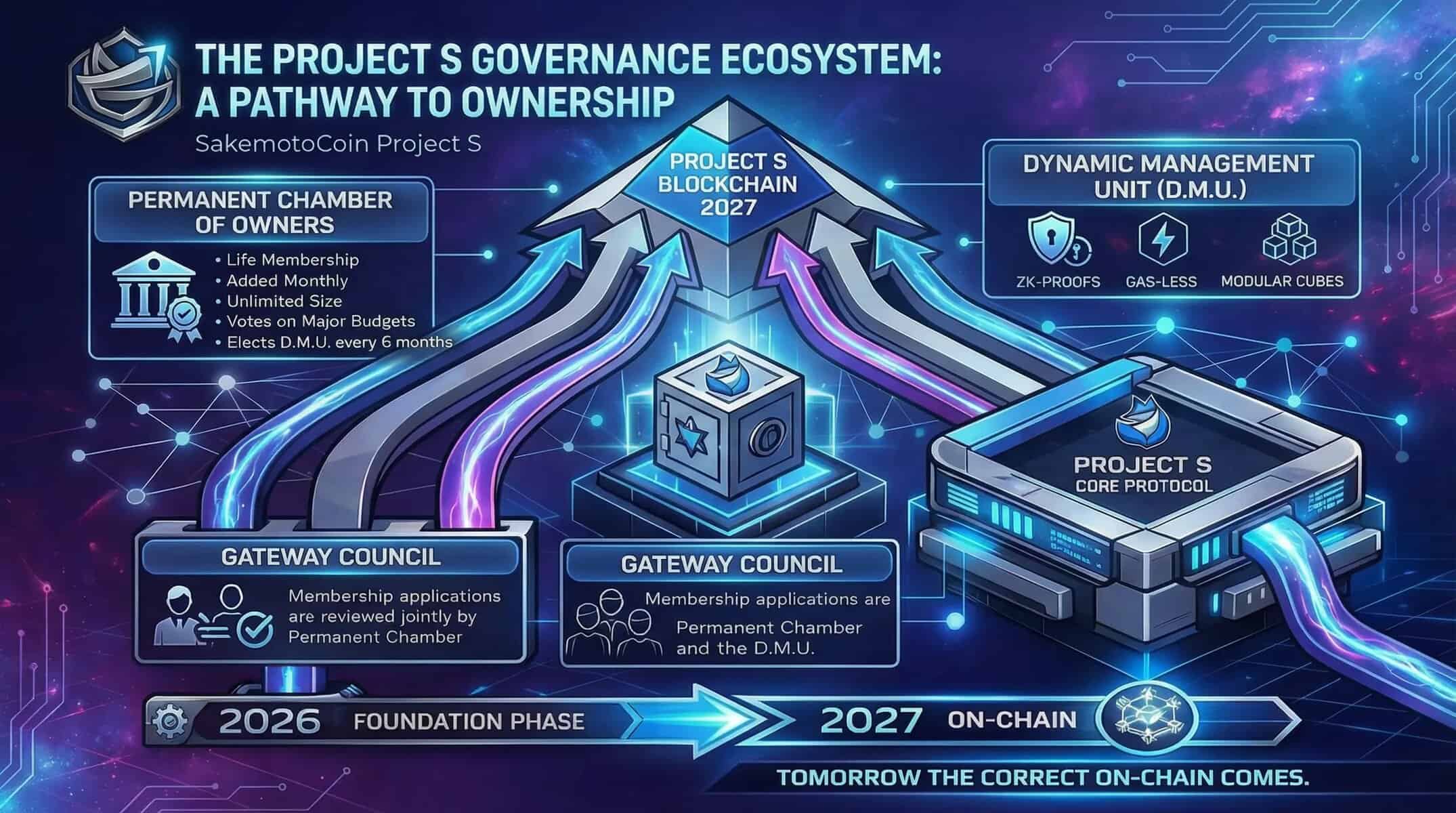
At the center of everything sits the Project S Blockchain, activated in 2027.
Think of it as the final settlement layer—not just for transactions, but for trust.
This is where:
- Governance becomes fully on-chain
- Ownership is transparent and verifiable
- Decisions leave backroom chats and enter public accountability
Everything else in the ecosystem feeds into this foundation. Just like in wealth building, where strong fundamentals matter more than flashy returns, Project S starts with infrastructure before promises.
Permanent Chamber of Owners
The Long-Term Backbone of Project S
The Permanent Chamber of Owners exists for one reason: to protect the project from short-term thinking.
Membership isn’t rushed. It’s earned.
A.Through contribution.
B.Through achievement.
C.Through meaningful investment.
This mirrors how real financial independence is built—not overnight, but through consistent, intentional effort.
The Chamber’s role includes:
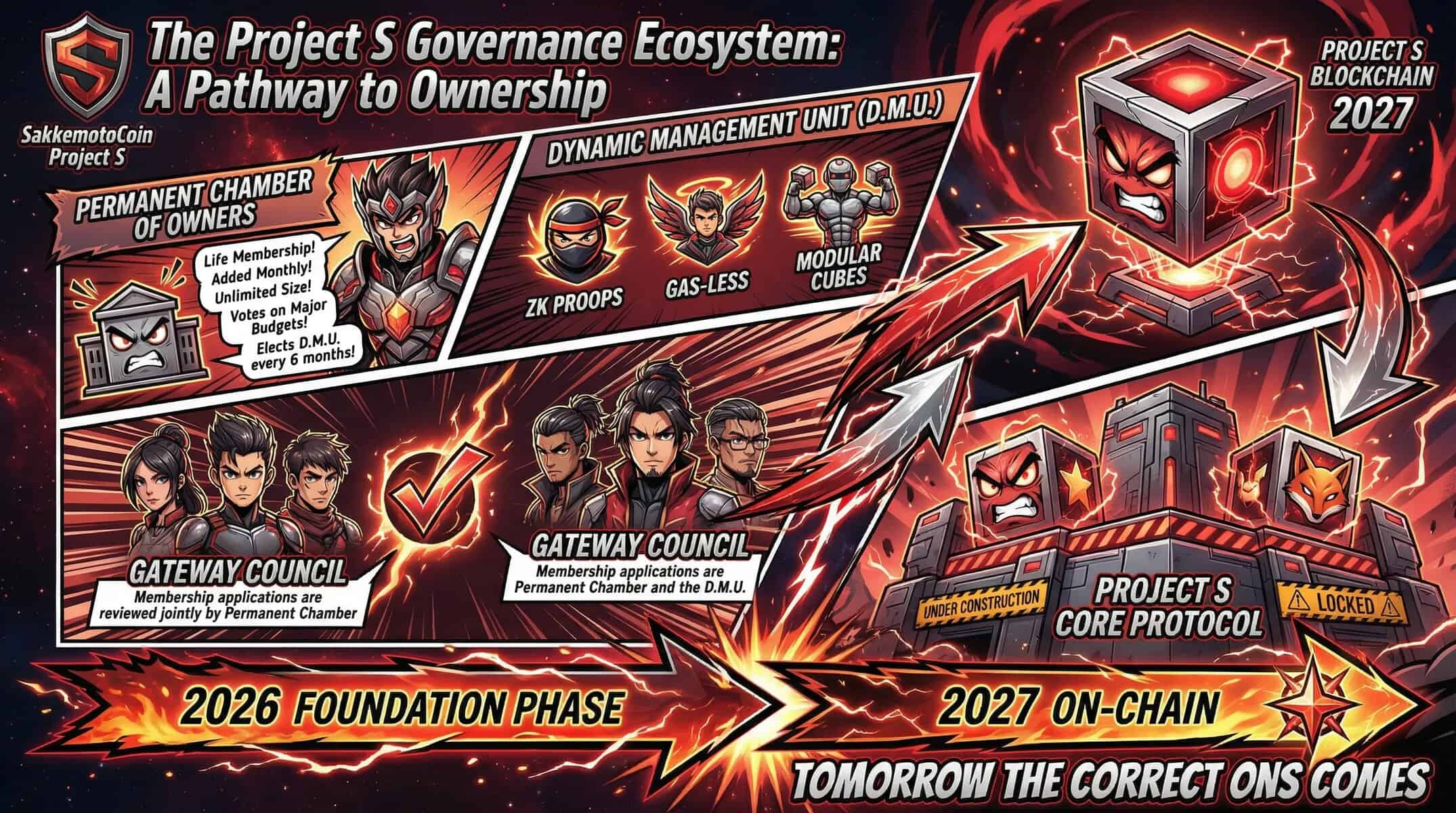
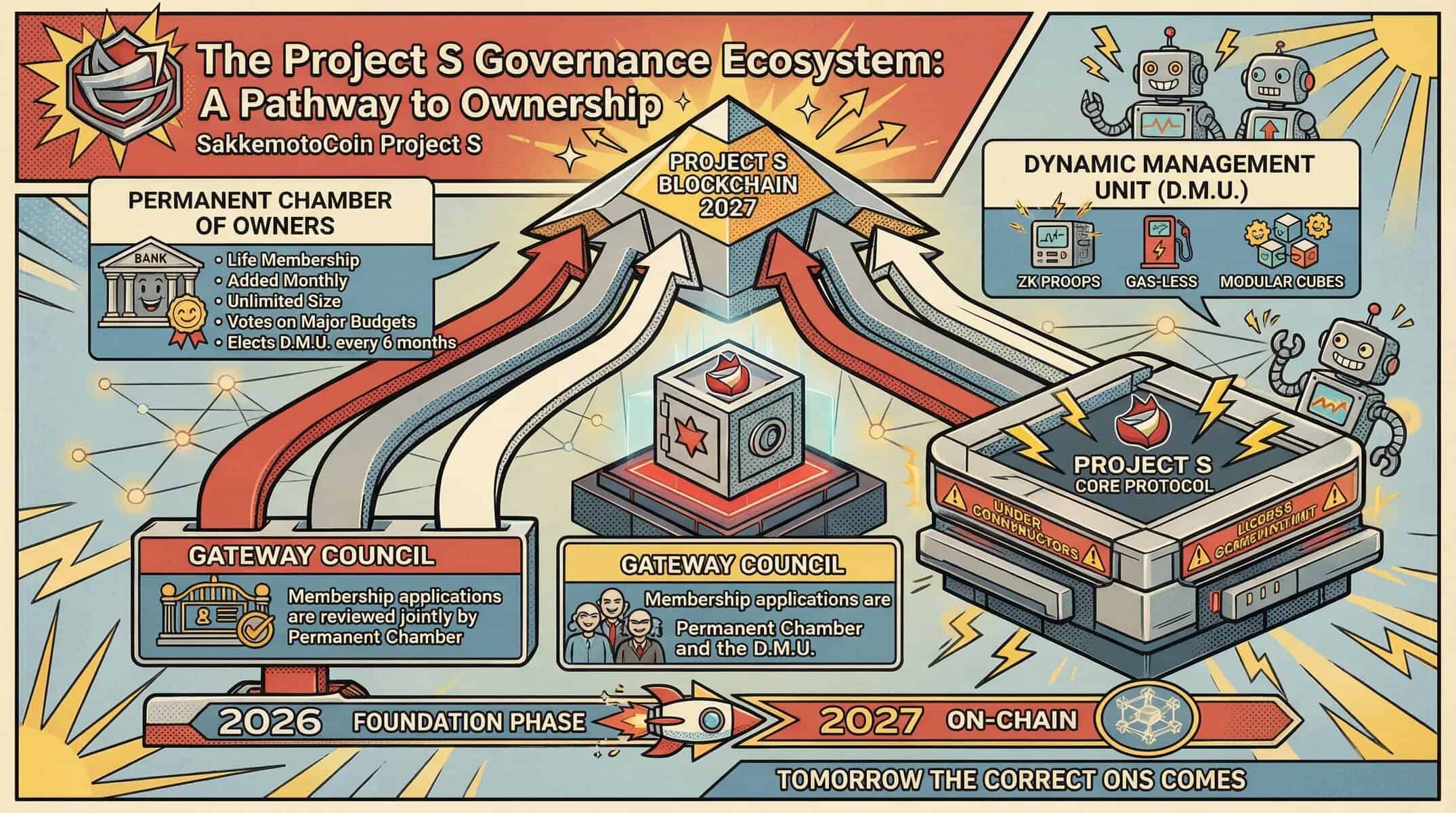
- Lifetime membership, added gradually
- Unlimited size to avoid centralization
- Voting on major budgets and strategic decisions
- Electing the Dynamic Management Unit (D.M.U.) every six months
- Acting as the long-term guardian of the project’s vision
In traditional finance, long-term shareholders stabilize companies. In Project S, owners stabilize the ecosystem.
Dynamic Management Unit (D.M.U.)
Execution With Accountability
Every system needs builders. But builders need boundaries.
The Dynamic Management Unit (D.M.U.) is the agile executive body of Project S. It moves fast—but never unchecked.
Its responsibilities include:
- Day-to-day operations
- Fast operational decisions
- Directing employees and contributors
- Managing development, partnerships, and growth
- Seeking Chamber approval for major budgets
Here’s the key difference from most projects:
the D.M.U. serves the owners—it does not rule them.
That’s a lesson straight out of investment strategies and corporate governance. Power without accountability always ends the same way.
Oversight & Elections
Balance Between Speed and Control
Every six months, leadership can be renewed.
A.No permanent power.
B.No silent capture.
C.No “temporary” control that quietly becomes forever.
This rhythm of oversight and elections creates balance—much like rebalancing a portfolio or reviewing personal finance habits regularly. It’s not about distrust. It’s about discipline.
Gateway Council
Keeping Governance Open, Not Careless
Not everyone enters ownership automatically—and that’s intentional.
The Gateway Council jointly reviews membership applications to ensure:
- Alignment with Project S values
- Long-term intent
- Meaningful contribution or commitment
In money terms, this is risk management.
In governance terms, it’s protection against dilution of purpose.
The Community
Where Every Journey Begins
Every owner starts as a community member.
There are no shortcuts here—only paths.
Members can move toward ownership through:
- Real achievements
- Long-term contribution
- Major investment
- Proven alignment with the ecosystem
Ownership is earned, not gifted. Just like passive income strategies, it requires patience before payoff.
Employees
Execution Without Control
Employees help build and operate the system—but they don’t control governance by default.
This separation protects decentralization and prevents internal capture. It’s a structure borrowed from lessons in both traditional finance and decentralized systems.
Timeline: From Foundation to On-Chain Reality
2026 – Foundation Phase
Structure, testing, community building, and preparation.
2027 – On-Chain Activation
Governance, ownership, and execution move fully on-chain through the Project S Blockchain.
This phased approach mirrors smart debt management and long-term investing: prepare first, deploy second.
Why This Matters (More Than You Think)
This governance model exists to solve real problems:
- No rug-pull governance
- No fake decentralization
- No short-term voting manipulation
- No unchecked leadership
Project S is built for people who think in years, not weeks.
Tomorrow, the correct ones come.
Frequently Asked Questions
What makes Project S governance different from typical DAOs?
Most DAOs confuse voting with ownership. Project S focuses on earned, accountable ownership backed by structure.
Can anyone become an owner?
Yes—but not instantly. Ownership comes through contribution, alignment, or significant investment.
How does this help financial independence?
Clear governance protects value, reduces risk, and supports long-term wealth building—principles central to financial independence.
Is SakkemotoCoin part of this governance system?
Yes. sakkemotocoin functions as a native asset tied to governance, incentives, and long-term participation.
Why delay full on-chain governance until 2027?
Rushing governance is like rushing investments. Project S prioritizes preparation over hype.
Final Thoughts: Ownership Is a Mindset
A mistake I see often—in finance and crypto—is confusing access with ownership.
Project S Governance Explained isn’t about control. It’s about alignment. About building systems that reward patience, contribution, and clarity.
If you care about financial mindset, sustainable investment strategies, and building something that lasts, this model will feel familiar—for all the right reasons.
Now the real work begins.
👉 Join the conversation and help shape the future:
- Telegram: https://t.me/sakkemotocoin
- Discord: https://discord.gg/
- X (Twitter): https://x.com/sakkemotocoin
Build wisely. Stay long-term. And choose ownership over noise.
Discover more from Financial Freedom with Sakkemoto
Subscribe to get the latest posts sent to your email.