

Most people don’t realize they’re stuck in the paycheck-to-paycheck trap until something goes wrong. A car breaks down. A medical bill arrives. A slow month at work. Suddenly, the fragility of the whole structure becomes impossible to ignore. And the terrifying part? It affects people at every income level. It’s not just those earning minimum wage. Professionals, managers, and even six-figure earners are affected.
The trap isn’t always about how much money you make. It’s about the gap — or lack of one — between what comes in and what goes out. It’s also about the habits that quietly keep that gap closed.
Why So Many People Stay Stuck
Here’s something most people underestimate: the paycheck-to-paycheck cycle is self-reinforcing. When you have no financial cushion, every unexpected expense becomes a crisis. And crisis-mode thinking makes it almost impossible to plan ahead. You’re always reacting, never building.
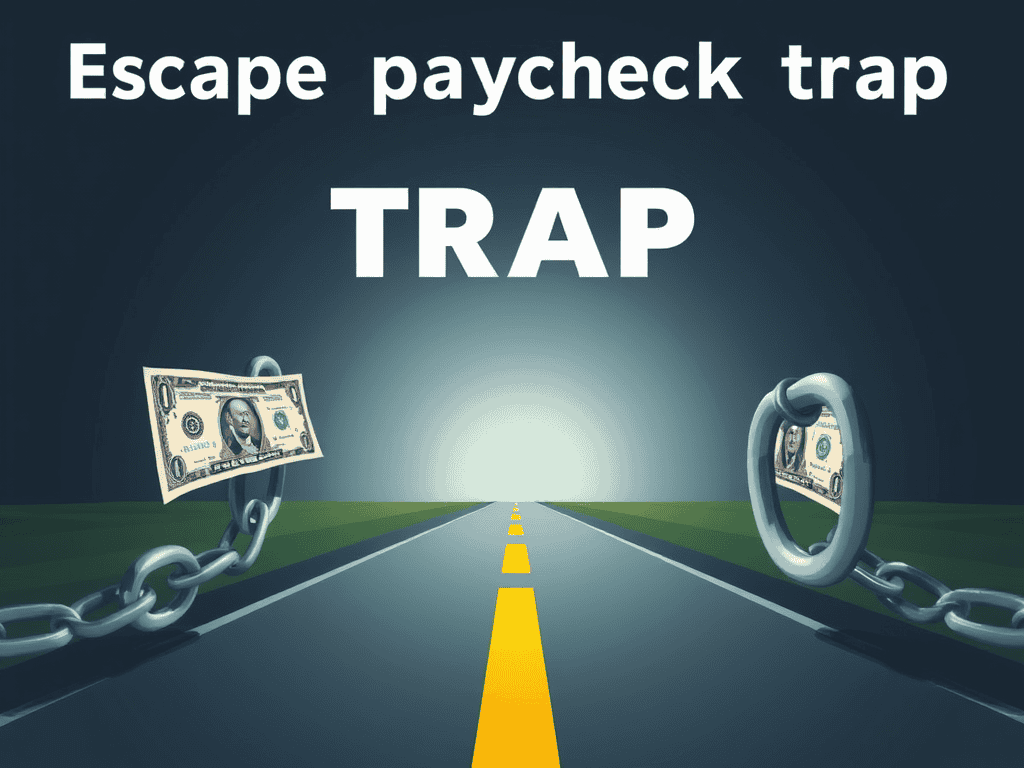
It’s not a character flaw. It’s a system that was never designed with your long-term wealth in mind. Credit cards are marketed as safety nets. Buy-now-pay-later options make overspending frictionless. And nobody teaches us personal finance habits in school.
Imagine this for a moment: you get paid on Friday. By Tuesday, after rent, groceries, bills, and a few small purchases that felt justified at the time, you’re already counting down to next Friday. That’s not just a cash flow problem — it’s a structural one. And structural problems require structural solutions, not just willpower.
The Core Insight: Margin Is Everything
The single most important concept in breaking the paycheck-to-paycheck trap is margin. This is the deliberate space between what you earn and what you spend.
Margin is what allows you to breathe. It’s what turns a car repair from a catastrophe into an inconvenience. It’s what makes investment strategies possible in the first place. Without margin, every dollar is already spoken for before it arrives, and wealth building becomes a fantasy rather than a plan.
Building margin doesn’t require a dramatic income jump. It requires a quiet, consistent shift in how you allocate what you already have. This is where financial independence begins — not with a windfall, but with a sliver of space that grows over time.
Practical Strategies to Start Breaking Free
Escaping the paycheck-to-paycheck trap isn’t about radical sacrifice. It’s about intelligent restructuring. Here are the moves that actually work:
- Pay yourself first — automatically. Set up an automatic transfer to a separate savings account the moment your paycheck lands. Even $50 a month changes the psychology. You stop seeing savings as what’s left over. You start seeing it as non-negotiable.
- Track spending for 30 days — honestly. Not to judge yourself, but to see clearly. Most people are genuinely shocked by where the money goes. That clarity is the foundation of real money management tips.
- Build a $1,000 starter emergency fund before anything else. This is your first line of defense. It won’t cover everything, but it covers most things — and it breaks the cycle of reaching for credit every time life happens.
- Audit your subscriptions and recurring charges. Most households are paying for three to five services they barely use. That’s real money that could be redirected toward debt management or early savings.
- Apply the 24-hour rule on non-essential purchases. Impulse buying is one of the biggest silent drains on financial progress. A single night of waiting changes the equation more often than not.
- Separate your accounts by purpose. Bills account. Spending account. Savings account. When money is mixed together, it disappears. When it’s separated, you develop a natural awareness of where you stand.
The Mistakes That Keep People Trapped
A mistake I see often is treating the symptom instead of the cause. People get a small raise and immediately upgrade their lifestyle — a nicer apartment, a newer car — without building any buffer first. This is lifestyle inflation, and it’s one of the most common reasons the trap stays closed even as income rises.
Another mistake: using debt to fill the gap instead of addressing the gap itself. Carrying a balance month to month on a credit card isn’t a strategy — it’s a slow leak. The interest quietly erodes any progress you make elsewhere.
And then there’s avoidance. Not looking at bank accounts. So not opening bills right away. Not calculating what’s actually owed. Financial anxiety drives many people to look away from the very information they need to move forward. Facing the numbers, even when they’re uncomfortable, is one of the most powerful things you can do for your financial mindset.
The Mindset Shift That Changes Everything
This is where things start to change — not in the spreadsheet, but in how you think about money.
Most people relate to money reactively. Money comes in, money goes out, and somewhere in between there’s stress. Shifting to a proactive relationship with money means deciding in advance where every dollar goes before the month begins. This is sometimes called a zero-based budget, and while the name sounds restrictive, it’s actually liberating. Nothing is left to chance or impulse.

The deeper shift is moving from a scarcity mindset — where money feels like something that always runs out — to a wealth-building mindset, where every dollar is a tool that can be directed with purpose. Passive income strategies are important. Long-term investing is crucial. Compound growth needs understanding. None of these concepts feel real until you’ve built the mental framework to hold them.
Wealth isn’t built by people who got lucky. It’s built by people who decided to think differently about money, and then acted consistently on that thinking over years.
The Long-Term Strategy: Slow, Steady, and Real
Financial independence isn’t a destination you arrive at overnight. It’s a direction you choose to move in, every single month.
Once you’ve built your emergency fund and broken the immediate cycle, the next phase is growth. That means:
- Increasing your emergency fund to three to six months of expenses
- Beginning even modest investments — index funds, retirement accounts — as early as possible to harness compound interest
- Gradually increasing your savings rate as income grows, keeping lifestyle inflation in check
- Exploring passive income strategies over time: rental income, dividend investing, side income that doesn’t trade hours for dollars
The timeline is longer than most people want. But the direction matters more than the speed. Every month you’re not losing ground to the paycheck-to-paycheck cycle is a month you’re building something that compounds.
Frequently Asked Questions
What is the best way to start escaping the paycheck-to-paycheck trap? Start with visibility and a small win. Track your spending for 30 days to understand where the money actually goes. Then build a $1,000 emergency fund before anything else. Small concrete steps create momentum that bigger plans alone cannot.
How do passive income strategies help with this cycle? Passive income reduces your dependence on a single paycheck. Even modest additional income — dividends, a side project, rental income — creates breathing room that makes the rest of your financial plan more resilient. It’s a long-term goal, not an immediate fix.
What personal finance habits matter most? Paying yourself first, tracking spending honestly, and avoiding lifestyle inflation as income grows are the three habits that have the biggest compounding impact. Consistency over time beats intensity in short bursts.
How can beginners start investing safely while in this cycle? Before investing, build your emergency fund. Once that’s in place, start with employer-matched retirement accounts if available — that’s an instant 50–100% return. After that, low-cost index funds through a brokerage are a sound, accessible starting point.
How long does it realistically take to break the cycle? Most people can build a meaningful financial cushion within six to twelve months of consistent effort. Full financial independence takes years. But the real breakthrough — the psychological shift from reactive to proactive — can happen in weeks once the habits are in place.
The Path Forward
Escaping the paycheck-to-paycheck trap isn’t about waiting for a better salary or a lucky break. It’s about creating margin, building habits, and shifting the way you think about money — one decision at a time.
The journey toward financial independence is rarely linear. There will be setbacks, unexpected expenses, and months that don’t go to plan. That’s not failure — that’s real life. What matters is that you keep the direction clear.

Start today, not with a perfect plan, but with a single honest step. Look at the numbers. Move $50 somewhere safe. Cancel one subscription. These small moves are not small. They are the foundation of everything that follows.
Your financial future isn’t determined by where you are today. It’s shaped by the habits you choose to build starting now.
Discover more from Financial Freedom with Sakkemoto
Subscribe to get the latest posts sent to your email.