

Building Effective Sales Funnels?Sales funnels are a fundamental concept in marketing and sales that can greatly impact the success of your business.
Building Effective Sales Funnels
If you’re new to the world of sales funnels, this comprehensive beginner’s guide will provide you with a solid foundation. It will help you build and implement an effective sales funnel for your business. We will explore the purpose of each stage of a sales funnel. Then, we will provide step-by-step instructions on how to create a powerful sales funnel that drives conversions.
So let’s dive in!
Understanding the Sales Funnel:
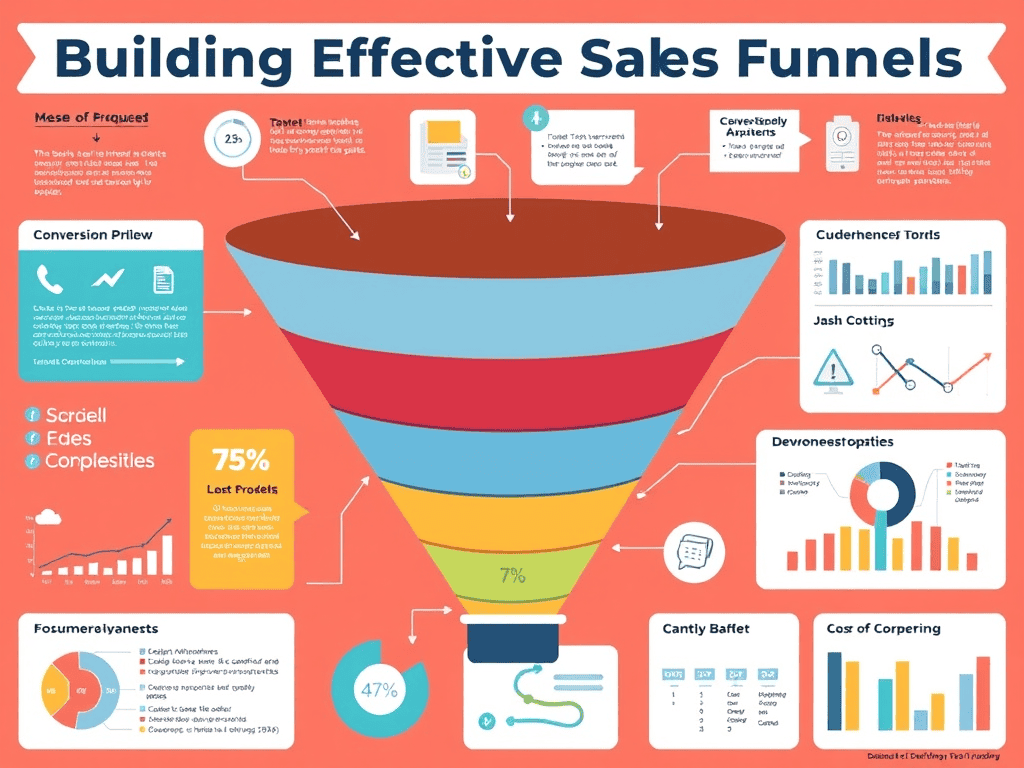
The sales funnel portrays the path your potential customers follow. This path begins when they first become aware of your brand and ends when they make a purchase. So it consists of several stages, each with its own purpose in guiding and nurturing leads towards becoming paying customers. The stages typically include awareness, interest, decision, and action. Understanding the sales funnel concept is crucial for developing a strategic approach to customer acquisition.
Defining Your Target Audience:
Before building your sales funnel, it’s essential to identify and define your target audience. Understand their needs, pain points, and motivations. This will enable you to tailor your funnel to resonate with their specific desires and preferences. Conduct market research, analyze customer data, and create buyer personas to gain a deep understanding of your ideal customers.
Creating Engaging Content:
To attract potential customers, you need to create compelling and relevant content for each stage of the funnel. So at the awareness stage, focus on educational and informative content that addresses your audience’s pain points. As leads progress through the funnel, provide content that is more targeted. Highlight the value and benefits of your products or services in this content. Utilize blog posts, videos, social media content, and lead magnets to capture and nurture leads.
Capturing Leads:
To effectively capture leads, you’ll need to create lead capture forms, landing pages, and call-to-action buttons on your website. Offer valuable incentives, such as free ebooks, webinars, or exclusive discounts, to entice visitors to provide their contact information. Implement email marketing automation to nurture leads and guide them through the funnel.
Nurture and Engage Leads:

Once you’ve captured leads, it’s crucial to nurture and engage them. Implement an email marketing campaign that delivers personalized and relevant content to each lead based on their interests and behavior. So utilize marketing automation tools to streamline the process and deliver targeted messages at the right time. Build trust, provide value, and establish yourself as an authority in your industry.
Converting Leads into Customers:
The decision stage of the funnel is where leads evaluate their options and make a purchasing decision. So offer compelling product demonstrations, case studies, testimonials, and customer reviews to showcase the value and benefits of your offerings. Create clear and persuasive call-to-action buttons and landing pages that lead to a seamless checkout process.
Analyzing and Optimizing Your Funnel:
To ensure the effectiveness of your sales funnel, continuously monitor key metrics. Analyze metrics such as conversion rates, click-through rates, and customer engagement. Use tools like Google Analytics or CRM software to gain insights into your funnel’s performance. Optimize each stage based on the data collected, making necessary adjustments to improve conversions and overall funnel efficiency.
Conclusion:
But building an effective sales funnel is a fundamental aspect of driving conversions and growing your business. Understand the purpose of each stage. Follow the step-by-step instructions outlined in this beginner’s guide.
By doing this, you can create a powerful sales funnel. This funnel will nurture leads, build customer relationships, and drive sales. Remember to continuously analyze and optimize your funnel based on data and feedback to maximize its effectiveness. With dedication and strategic implementation, your sales funnel can become a valuable asset for achieving sustainable growth and success.

🔁 Sales Funnels Demystified – FAQ by Sakkemoto
1. What is a sales funnel, exactly?
A sales funnel is a step-by-step process that guides potential customers from discovering your brand to making a purchase — and ideally, becoming loyal fans. It’s like a digital journey: Awareness → Interest → Decision → Action.
2. Why do I need a sales funnel for my online business?
Because not everyone buys on first contact. A funnel lets you build trust, deliver value, and nurture leads over time — turning cold traffic into warm buyers, and casual visitors into paying customers.
3. Is a sales funnel just a landing page?
No — a landing page is one piece of a funnel. A full funnel might include:
- Lead magnets (to capture emails)
- Email sequences (to nurture)
- Product pages
- Upsells, downsells, or thank-you offers
It’s the entire flow, not just one touchpoint.
4. What are the stages of a high-converting sales funnel?
- Awareness – Social media, SEO, ads bring people in
- Interest – Freebies, blog posts, or webinars build curiosity
- Desire – Case studies, testimonials, or videos show results
- Action – A strong CTA (Call to Action) drives the sale or signup
At Sakkemoto, we focus on value-first funnels — not spammy tactics.
5. Do I need expensive tools to build a funnel?
Not at all. Many creators start with:
- WordPress + Elementor or Blocksy
- ConvertKit or MailerLite for emails
- Stripe or Gumroad for payments
Simplicity wins — as long as your message and offer are clear.
6. How do I know if my sales funnel is working?
Track these key metrics:
- Conversion rates at each stage
- Email open/click rates
- Abandonment points (where people drop off)
- Revenue per lead
Tools like Google Analytics, email dashboards, and A/B testing help refine your funnel for better performance.
7. What common mistakes ruin sales funnels?
- No clear audience or message
- Asking for a sale too early
- Weak or missing lead magnets
- Confusing navigation or cluttered design
- No follow-up strategy
Funnels need clarity, value, and trust-building to work well.
8. How long does it take to build a sales funnel?
A simple funnel can be built in a weekend. A more refined system (with email sequences, testing, and upsells) may take a few weeks. Don’t aim for perfection — launch, learn, and improve.
9. Can sales funnels be automated?
Yes! That’s the beauty of it. With the right tools, you can automate:
- Email sequences
- Product delivery
- Customer onboarding
Automation lets your funnel work 24/7 — even when you sleep.
10. What’s the #1 tip for building a sales funnel that converts?
Focus on solving a real problem.
If your funnel helps the right person with the right solution, everything else — clicks, conversions, and cash — will follow. Start with value, not hype.
Discover more from Financial Freedom with Sakkemoto
Subscribe to get the latest posts sent to your email.